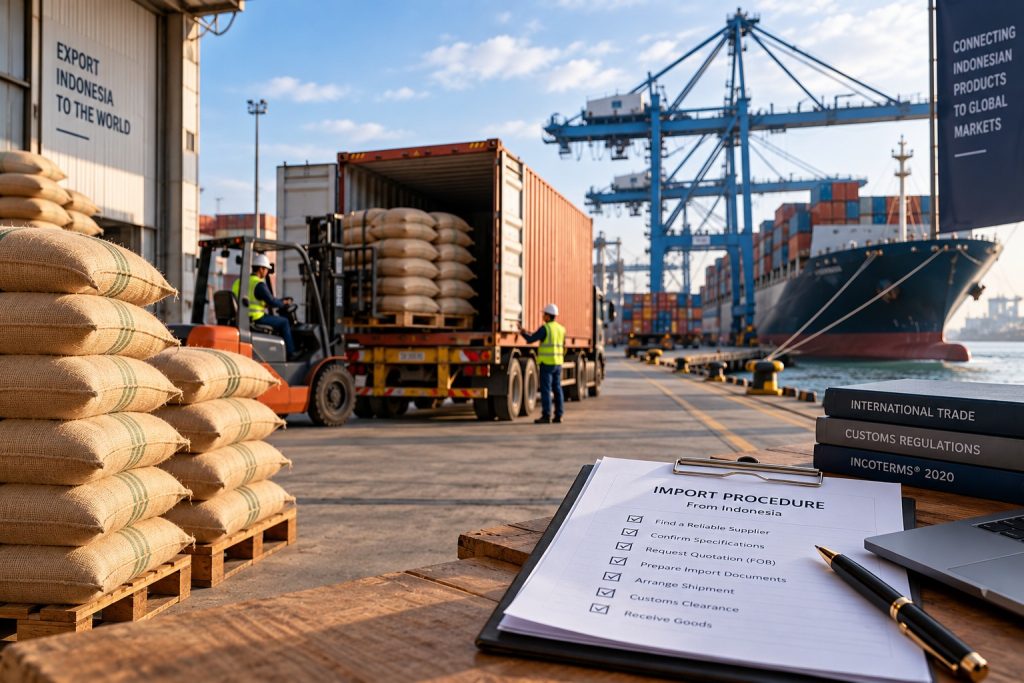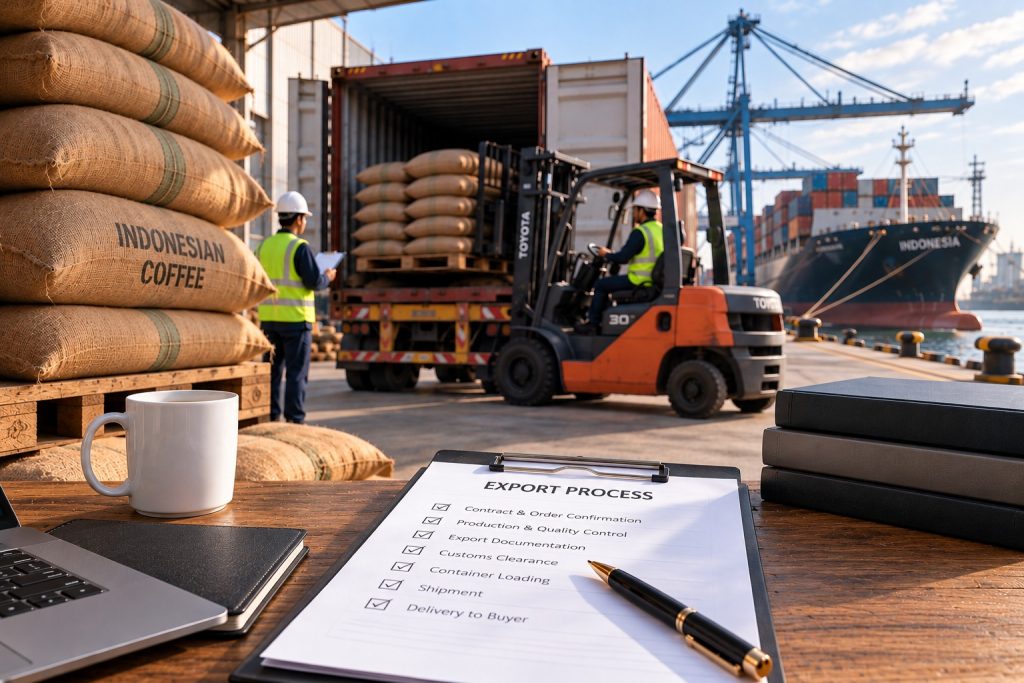
Looking for a reliable Indonesian Robusta coffee supplier? Choosing the right export partner is about much more than securing the lowest initial FOB quote.
For international green coffee buyers, a dependable supplier must demonstrate consistent physical quality, transparent technical specifications, disciplined local sourcing, operational export capability, full customs documentation, and responsive communication.
Indonesia produces an extensive range of Robusta coffees across diverse regional terroirs, processing styles, and commercial tiers. That creates vast opportunities for commercial blenders and espresso roasters—but it also demands a structured evaluation framework. This guide outlines the essential criteria to evaluate when selecting a supplier for Indonesian Robusta green coffee beans.
1. Start With Coffee Origin Transparency
The first fundamental question to ask any prospective supplier is:
“Where exactly does the coffee come from?”
“Indonesia” designates a nation of over 17,000 islands, not a specific cup profile. Robusta is produced across multiple distinct geographic regions with different soil types, elevations, rainfall patterns, and harvest traditions:
- Central Java (Temanggung): Mountainous volcanic plateaus yielding dense beans with rich cacao, almond, and clean finishes.
- Southern Sumatra (Lampung, South Sumatra, Bengkulu): Massive commercial volumes offering bold, heavy, and intensely earthy profiles.
- East Java (Malang, Dampit, Ijen): Highland plantations with balanced chocolate-hazelnut notes.
- Bali & Flores: Island microclimates producing unique commercial and specialty Robusta preparations.
If your procurement target is Temanggung Robusta coffee, the exporter must verify specific highland regency sourcing rather than delivering generic regional aggregations.
2. Demand Verifiable Specifications, Not Vague Grade Labels
The term “Grade 1” is frequently used loosely in coffee marketing. Never commit capital based merely on a statement such as “We supply premium Grade 1 Robusta.”
Require your supplier to provide an objective specification sheet detailing measurable physical thresholds:
| Specification Parameter | What the Buyer Should Verify |
|---|---|
| Specific Origin | Regency, province, and altitude band |
| Botanical Species | Coffea canephora (Robusta) |
| Commercial Grade | National standard (SNI) or custom buyer grade |
| Screen Size Distribution | Certified percentage retained on target sieves (e.g., Screen 16–18) |
| Moisture Content | Tested range prior to container stuffing (11.5%–12.5% max) |
| Defect Point Count | Maximum allowable primary/secondary defects per 300g sample |
| Processing Method | Natural Dry, Washed, or Semi-Washed |
| Crop Year | Current harvest verification (avoiding faded past-crop lots) |
| Packaging Format | 60 kg export jute sacks (with or without GrainPro hermetic liners) |
| Port of Departure | Nominated Indonesian export port (e.g., Tanjung Mas, Semarang) |
Procurement Rule: Never compare suppliers on price alone. Compare strictly equivalent physical specifications.
3. Request a Technical Product Specification Sheet
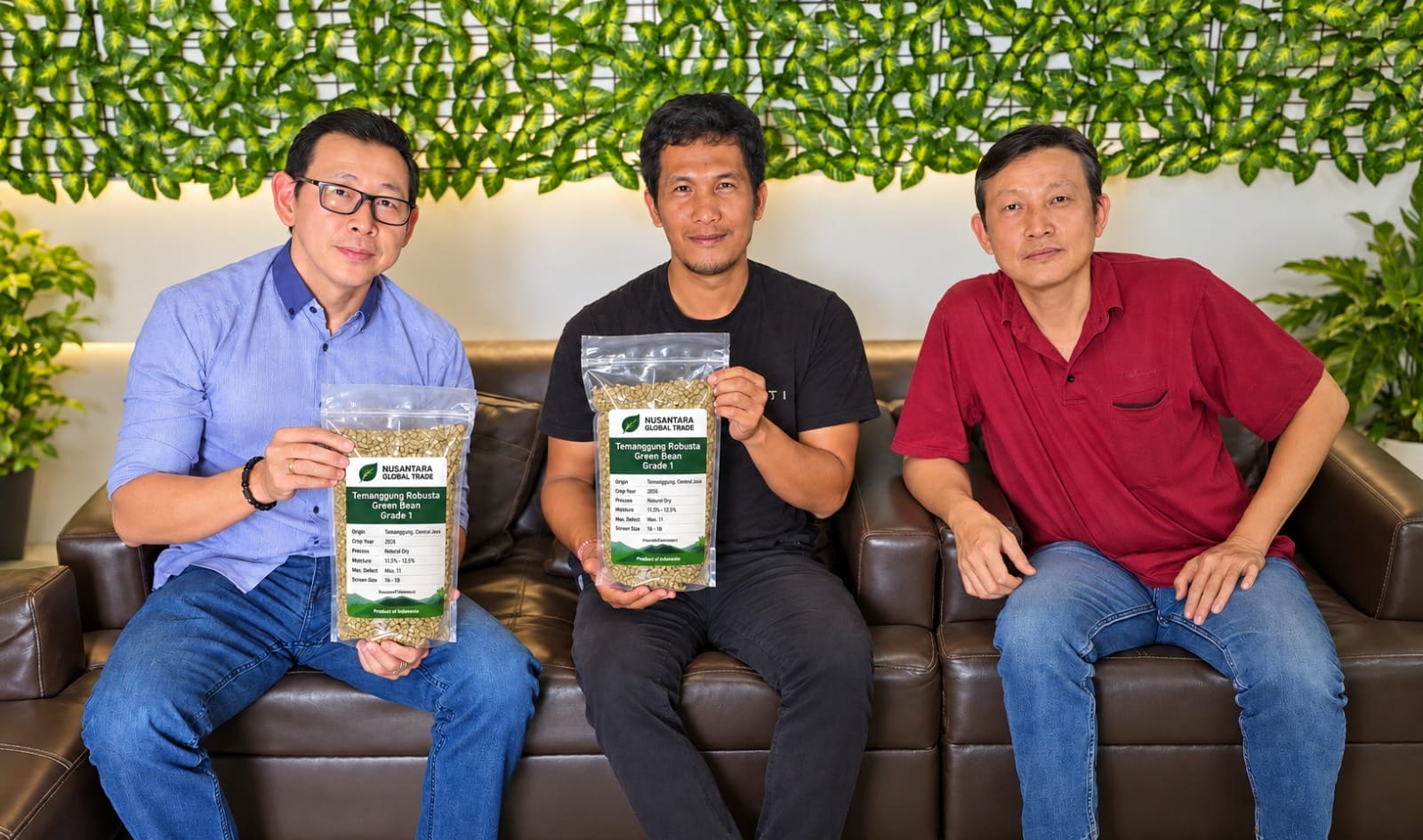
A legitimate export partner will instantly furnish a formal product specification sheet reflecting the physical lot being offered. Below is an example of our standard commercial Grade 1 profile:
- Product: Indonesian Robusta Green Coffee Beans
- Origin: Temanggung, Central Java, Indonesia
- Species: Coffea canephora
- Processing: Natural Dry Processed
- Grade: Grade 1 (Selected Quality)
- Screen Size: 16–18 (min. 85% retention)
- Moisture Content: 11.5%–12.5%
- Defect Limit: Max. 11 points (per 300g sample)
- Packaging: 60 kg clean export jute bags
- Incoterm: FOB Tanjung Mas, Semarang
4. Request and Evaluate a Physical Lot Sample
Never commit to full container load (FCL) volumes based solely on digital imagery. Request a Pre-Shipment Sample (PSS) pulled directly from the physical warehouse lot.
When the sample arrives at your lab, inspect it systematically:
- Physical Analysis: Weigh 300 grams to tally primary/secondary defects, verify moisture equilibrium on a calibrated meter, and screen through sieves.
- Test Roasting: Evaluate drum thermodynamics, crack progression, expansion ratio, and smoke profile.
- Sensory Cupping: Confirm clean extraction, dense crema yield, heavy mouthfeel, and absence of musty, phenolic, or fermented taints.
Always ask: “Will our contracted commercial container be stuffed from this identical physical lot run?”
5. Evaluate Quality Control & Warehouse Discipline
A credible exporter must clearly articulate how green bean quality is safeguarded between field collection and vessel loading:
Sourcing → Cherry Grading → Controlled Drying → Dry Milling → Mechanical Sorting → QC Lab Testing → Jute Bagging → Container Stuffing
Our dedicated sourcing and quality control framework adheres to international standards (including ISO 10470 for defect identification, ISO 4072 for representative lot sampling, and ISO 8455 for maritime storage and transport guidelines).
6. Verify Operational Infrastructure and Sourcing Scale
A polished website does not move maritime cargo. Require prospective suppliers to demonstrate operational substance:
- Active dry milling infrastructure and mechanical sorting decks
- Clean, well-ventilated, pest-controlled origin warehouses
- Real-time lot photos showing tagged, stacked jute bags
- Documented relationships with local collector networks and cooperatives
- Verifiable container stuffing procedures and desiccant application
7. Check International Export Competency
An exceptional domestic coffee trader often lacks the regulatory expertise required for seamless international trade. Ensure your exporter demonstrates verified execution on our export operations desk, including:
- PEB Filing: Submitting electronic Customs Export Declarations (Pemberitahuan Ekspor Barang) via CEISA.
- Certificate of Origin (Form ICO): Securing official Ministry of Trade certificates confirming origin under International Coffee Organization rules.
- Phytosanitary Clearance: Coordinating mandatory agricultural quarantine inspections (Barantan) prior to loading.
- Maritime Booking: Securing food-grade 20ft container equipment with premier international ocean lines.
8. Clarify Destination-Specific Compliance (EUDR, FDA)
Import compliance is destination-specific. Inform your exporter of your exact discharge port early to verify regulatory readiness:
- European Union (EU): Verification of upcoming EU Deforestation Regulation (EUDR) due diligence, farm-level geolocation polygons, and pesticide MRL testing.
- United States: FDA Food Facility Registration numbers and Prior Notice filing protocols.
- Middle East & Asia: Specific embassy document legalization and mandatory shipping mark formats.
9. Compare Incoterms on an Equal Basis
Ensure you are comparing quotations on identical commercial baselines. A quotation of USD X.XX/kg FOB Tanjung Mas cannot be directly compared to USD Y.YY/kg CIF Hamburg.
FOB covers inland transport, export handling, and loading aboard the vessel in Indonesia. CFR/CIF adds ocean freight and marine cargo insurance to your destination port. Clarify terminal handling charges (THC) and document fee responsibilities upfront.
10. Assess Communication Discipline
Communication friction during the quotation phase translates to disastrous logistics delays during contract execution. Partner with suppliers who:
- Transmit structured, itemized formal quotations promptly
- Answer technical questions regarding crop cycles, moisture, and screen sizing transparently
- Acknowledge inventory constraints honestly rather than overpromising volume
- Maintain direct, accessible communication via WhatsApp and corporate email
11. Confirm Immediate Stock Availability vs. Future Crop
Never assume an online product listing means ready stock in the warehouse. Agricultural commodity availability shifts across seasons. Always verify:
Ready Warehouse Stock → Available Metric Tons → Crop Year → Packing Lead Time → Vessel Gate-In Schedule
12. Don’t Select Exclusively on the Lowest Price
A cut-rate quotation is often the most expensive container you will ever buy:
| Supplier Profile | FOB Price | Specification Rigor | Supply Risk | Total Landed Cost |
|---|---|---|---|---|
| Supplier A | Lowest | Vague, mixed screens | High (Demurrage / Rejection) | Very High (Hidden sorting loss) |
| Supplier B (Professional) | Competitive | Certified Screen 16–18, max 11 defects | Low (Full PEB / ICO compliance) | Optimal & Predictable |
13. Sourcing Indonesian Robusta From Central Java
At Nusantara Global Trade, we connect international coffee roasters, importers, and distributors with verified Indonesian Robusta green coffee beans sourced directly from Central Java.
Our commercial portfolio out of Temanggung includes:
- Temanggung Robusta Green Bean Grade 1: Screen 16–18, max 11 defect points, and Natural Dry processing. Engineered for premium espresso roasting requiring thick crema and low sortex loss.
- Temanggung Robusta Green Bean Grade 3 (Asalan): High-volume commercial grade offering Screen 14–18 sizing and economical pricing for commercial roasting and soluble extraction.
14. Supplier Evaluation Checklist
Origin & Product
☐ Specific regency origin confirmed
☐ Screen size distribution specified
☐ Maximum defect ceiling certified
☐ Moisture guaranteed ≤ 12.5%
☐ Pre-shipment sample tested
Export & Logistics
☐ Ready warehouse volume verified
☐ Loading port designated (Tanjung Mas)
☐ Incoterm clearly defined (FOB/CFR/CIF)
☐ Electronic PEB & Form ICO provided
☐ Phytosanitary certification handled
Frequently Asked Questions
What are the key criteria when choosing an Indonesian Robusta supplier?
Focus on origin transparency, certified screen and defect specifications, proven dry-mill QC infrastructure, reliable container export licensing (PEB and Form ICO), and responsive communication.
Can I request green coffee samples prior to contracting?
Yes. Professional exporters provide representative pre-shipment samples (PSS) from current harvest runs via international air courier for laboratory testing and test roasting.
What is standard export packaging for Indonesian green coffee?
Commercial coffee is predominantly packed in clean, food-grade 60 kg jute bags. Hermetic inner liners (e.g., GrainPro) can be incorporated upon buyer request to preserve moisture across long ocean transits.
How much coffee fits into a 20ft container?
A standard 20-foot full container load (20ft FCL) floor-loads between 300 and 320 bags (18.0 to 19.2 Metric Tons net weight).
Can buyers source Temanggung Robusta Grade 1 year-round?
Yes, subject to seasonal stock holdings. Peak harvest milling runs from July through September, with stable warehouse inventories maintained for recurring commercial programs.
Ready to Partner With an Established Indonesian Exporter?
Choosing an Indonesian Robusta supplier is about establishing an enduring, risk-managed supply chain. At Nusantara Global Trade, we combine transparent sourcing in Central Java with disciplined export operations to deliver specification-verified green beans directly to your roastery.
Request an Indonesian Green Coffee Quotation
Contact our export desk today with your target grade, required volume, destination port, and preferred Incoterm. Our team will provide lot specifications, physical samples, and current FOB/CIF pricing.