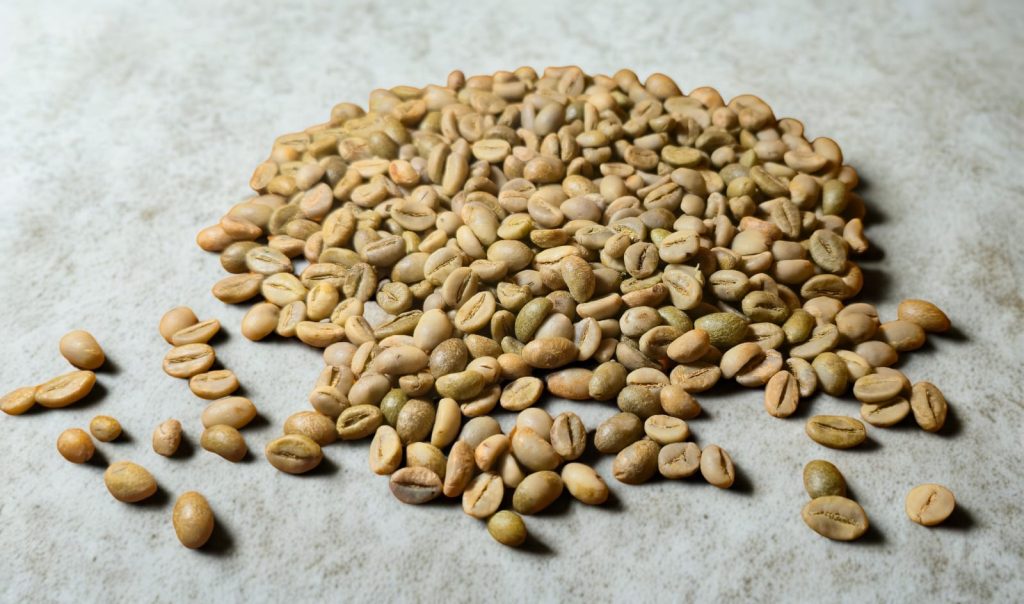
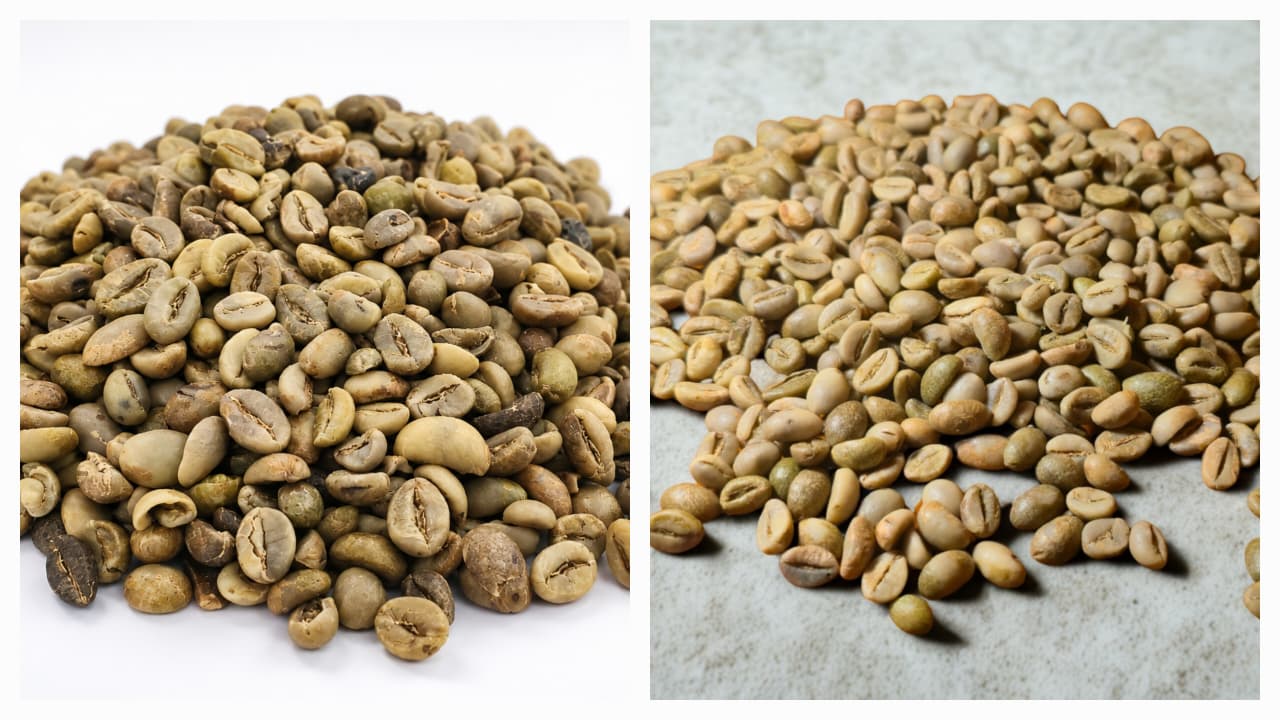
Understanding the differences in physical specifications, quality, applications, and purchasing considerations when sourcing Indonesian Robusta green coffee beans.
For international coffee buyers, choosing between Robusta Grade 1 and Grade 3 is not simply a question of which grade is “better.” The right choice depends on your quality requirements, intended application, target market, roasting profile, volume, and purchasing budget.
Indonesian Robusta coffee is widely used across commercial coffee applications, and buyers sourcing green beans from Indonesia may encounter different grading systems and commercial specifications depending on the origin, supplier, contract, and applicable standards.
For buyers considering Indonesian Robusta green beans, understanding the relationship between screen size, physical defects, moisture, processing, origin, and intended use is essential before placing a commercial order.
In this guide, we explain the key differences between Robusta Grade 1 and Grade 3, with a particular focus on commercially supplied Indonesian Robusta from Central Java.
What Is Robusta Green Coffee?
Robusta coffee comes from the species Coffea canephora, one of the primary commercially cultivated coffee species globally.
Compared with Arabica, Robusta is commonly associated with a stronger body, pronounced bitterness, and a distinctive flavor profile. It is widely used in espresso blends, instant coffee, commercial blends, and other coffee applications.
For green coffee buyers, however, the value of a Robusta lot cannot be determined by species alone. Important evaluation parameters include:
- Origin & microclimate
- Processing & drying method
- Screen size distribution
- Moisture content
- Physical defect count
- Bean density & color
- Crop year & storage conditions
- Cup balance & crema performance
Professional green coffee evaluation involves multiple physical and sensory considerations rather than relying on a single grade label. Physical characteristics such as defects, moisture, and size should be evaluated alongside descriptive, affective, and extrinsic supply data.
Robusta Grade 1 vs Grade 3 at a Glance
The exact specification should always be confirmed with the supplier before contracting. For the commercial specifications supplied by Nusantara Global Trade, the comparison is summarized below:
| Specification | Robusta Grade 1 | Robusta Grade 3 |
|---|---|---|
| Origin | Temanggung, Central Java | Temanggung, Central Java |
| Species | Coffea canephora | Coffea canephora |
| Form | Green Coffee Bean | Green Coffee Bean |
| Commercial Tier | Higher-grade selection | Commercial grade |
| Screen Size | 16–18 (Large Bean) | 14–18 (Standard Commercial) |
| Maximum Defects | Max. 11 points* | Max. 44 points* |
| Processing | Natural Dry | According to lot / specification |
| Typical Application | Higher-quality commercial roasting, espresso blends | Commercial blends, soluble coffee, price-sensitive packs |
| Packaging | 60 kg jute bags | 60 kg jute bags |
| Availability | Subject to current harvest stock | Subject to current harvest stock |
*These figures refer to the commercial specifications offered by Nusantara Global Trade and should not be interpreted as a universal definition across all origins and contracts.
1. Physical Quality and Defect Levels
One of the most important distinctions buyers evaluate is the physical defect profile.
Defects influence visual appearance, sortex yield loss, roasting behavior, and sensory characteristics. For this reason, green coffee buyers should never rely solely on generic grade names. Instead, request a specification sheet showing defect count, defect categories, screen breakdown, moisture, and sample availability.
Grade 1
In our commercial specification, Grade 1 is prepared with a tightly controlled physical profile, featuring a maximum defect count of 11 points. This makes it appropriate for roasters who emphasize physical uniformity, visual cleanliness in whole-bean retail packs, and low sorting loss.
Grade 3
Grade 3 is positioned as a commercial-grade Robusta with a higher defect allowance (capped at Max. 44 points). This does not mean Grade 3 is inferior for commercial applications; rather, it provides an economical solution for industrial, soluble, and price-sensitive blending programs where aggressive roast profiles integrate minor physical variations seamlessly.
2. Screen Size: Why Does It Matter?
Screen size refers to the physical dimensions of green coffee beans sorted through calibrated sieves.
- Grade 1: Screen 16–18
- Grade 3: Screen 14–18
A narrower or larger screen distribution contributes to consistent bean mass entering the roasting drum. However, screen size alone does not dictate cup quality. Larger beans do not automatically equate to superior flavor. Buyers should always assess screen distribution in tandem with defect levels, moisture equilibrium, density, and cup balance.
3. Moisture Content
Moisture is critical when purchasing green coffee for ocean transit. Coffee stored or transported at unsuitable moisture levels is prone to fungal spoilage or rapid cup fading.
When evaluating lots, international buyers should ask:
- What is the measured moisture percentage prior to shipment? (Standard target: 11.5%–12.5%)
- What measurement tool and protocol were utilized?
- Was the sample pulled representatively across the lot?
- Under what warehouse conditions was the lot stored?
4. Processing Method
The processing method significantly shapes the resulting cup profile. The same botanical variety will perform differently depending on whether it undergoes dry or wet processing.
For our Grade 1 offering, the standard process is Natural Dry, where the cherry fruit is dried intact over the seed, promoting full body, high sweetness, and deep chocolate undertones. Regardless of the grade, the exact post-harvest process should always be transparently documented on the quotation sheet.
5. Intended Application
The defining question for procurement managers is simple:
“What is the intended application of the coffee?”
Grade 1 is ideal for:
- High-crema Italian-style espresso blends
- Specialty-oriented Robusta offerings
- Roasters requiring tight drum thermodynamics and low sort loss
- Whole-bean retail offerings where visual presentation matters
Grade 3 is ideal for:
- Large-scale commercial supermarket blends
- Soluble (instant) and liquid RTD extraction programs
- Price-sensitive regional markets
- Dark-roasted profiles where base body is prioritized over bean geometry
6. Price vs. Quality: Finding the Right Balance
A common pitfall in commercial coffee procurement is assuming that higher grades are always the smarter purchase.
If an industrial client requires massive volume for a soluble line or dark-roast blend where flavor nuances are secondary to body and cost efficiency, purchasing Grade 1 adds unnecessary cost. Conversely, if an espresso roaster requires clean bean presentation and consistent bean expansion, Grade 1 delivers the necessary precision.
The Procurement Objective: Match the green bean specification to the finished product formulation, rather than buying the highest grade by default.
7. What Should Buyers Ask an Indonesian Robusta Supplier?
Before issuing a purchase order, procurement teams should request comprehensive documentation covering:
- Product Details: Regency origin, species, crop year, and drying method
- Physical Parameters: Grade classification, screen sizing distribution, maximum defect count, moisture reading
- Commercial Terms: Available volume, MOQ, packing specs (60 kg jute), Incoterm (FOB Tanjung Mas / CIF), loading schedule
- Verification: High-resolution lot photography, pre-shipment samples (PSS), and independent quality certificates
8. Why Request a Sample Before Ordering?
For commercial coffee importers, pre-shipment samples bridge the gap between specification sheets and factory roasting realities. Evaluating a sample allows you to inspect:
- Physical Attributes: Color, aroma, bean sizing consistency, defect count
- Roasting Dynamics: Drum heat absorption, first crack timing, expansion ratio
- Sensory Characteristics: Body intensity, crema stability, bitterness balance, lingering finish
9. Grade 1 or Grade 3: Which One Should You Buy?
| Buyer Requirement | Recommended Selection |
|---|---|
| Tighter physical specifications & lower defects | Grade 1 |
| Higher defect tolerance & competitive unit cost | Grade 3 |
| Premium espresso crema component | Grade 1 |
| Large-scale commercial blending & instant coffee | Grade 3 |
| Screen uniformity (Screen 16–18 focus) | Grade 1 |
| Custom specification requirements | Request a tailored sample & quote |
10. Sourcing Indonesian Robusta from Central Java
Indonesia’s coffee production spans diverse volcanic origins. Temanggung, Central Java is one of the origins from which Nusantara Global Trade sources export-ready Robusta green beans.
Highland altitude, volcanic soils, and established smallholder farming networks allow Temanggung to supply coffees with remarkable bean density, rich cacao notes, and consistent physical preparation.
11. Why Work With a Specialized Export Supplier?
Commercial green coffee procurement is more than securing a low spot price per kilogram. A professional Indonesian coffee exporter provides transparent supply chain visibility, handles complex export licensing and phytosanitary inspections, and maintains lot integrity across repeat container shipments.
Indonesian Robusta Green Beans for International Buyers
At Nusantara Global Trade, our commercial offerings from Central Java include:
Temanggung Robusta Green Bean Grade 1
- Origin: Temanggung, Central Java, Indonesia
- Species: Coffea canephora
- Processing: Natural Dry
- Screen Size: 16–18
- Max Defects: 11 points
- Packaging: 60 kg export jute bags
Temanggung Robusta Green Bean Grade 3
- Origin: Temanggung, Central Java, Indonesia
- Species: Coffea canephora
- Screen Size: 14–18
- Max Defects: 44 points
- Packaging: 60 kg export jute bags
Frequently Asked Questions
Is Grade 1 always better than Grade 3?
Not necessarily. Suitability depends entirely on your formulation and budget. Grade 1 provides superior visual consistency and lower defects for espresso roasting, while Grade 3 provides cost efficiency for volume blends and industrial extraction.
What is the primary specification difference?
In our portfolio, Grade 1 offers a maximum defect threshold of 11 with Screen 16–18 sizing, whereas Grade 3 allows up to 44 defect points across Screen 14–18 sizing.
Can Grade 3 be used for commercial roasting?
Yes. Commercial roasters regularly utilize Grade 3 in dark-roasted blends and supermarket lines where cost optimization is essential and minor bean variations do not compromise product performance.
Can I request a sample of both grades?
Yes. We routinely supply international buyers with side-by-side samples of both Grade 1 and Grade 3 to assist in recipe testing and commercial feasibility analysis.
Ready to Source Indonesian Robusta Green Beans?
Whether you require Grade 1 espresso components or container-load Grade 3 commercial supplies, Nusantara Global Trade is equipped to fulfill your procurement needs. Contact our export desk to receive specifications, pre-shipment samples, and current FOB pricing.